
Things to do
Kim Bong Carpentry Village Hoi An

Hoi An old town is one of the World Heritage Sites recognized by UNESCO, not only famous for its ancient streets and poetic Hoai River but also the cradle of many long standing traditional craft villages. Among them, Kim Bong carpentry village Hoi An is one of the traditional craft villages that cannot be ignored, where talented craftsmen have been preserving and promoting the quintessence of Vietnamese wood carving over the centuries. Coming to Kim Bong, visitors can not only admire the magnificent works of art but also immerse themselves in a cultural space imbued with tradition, listening to stories about the history of formation and development of a famous craft village.
History of formation and development
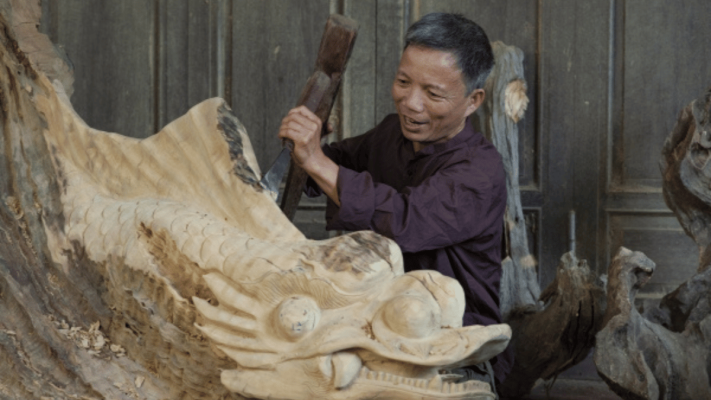
Located on the banks of the Thu Bon River, in Cam Kim Commune, Hoi An City, Kim Bong Carpentry Village has a history of formation and development since the 15th century, when the first carpenters from the northern provinces of Vietnam migrated here, bringing with them the quintessence of traditional carpentry. With their ingenuity and creativity, they quickly turned Kim Bong into a famous carpentry center, supplying wood products to the entire region.
The development of the bustling Hoi An port city in the 17th and 18th centuries created favorable conditions for the Kim Bong Hoi An carpentry village to flourish. Kim Bong carpenters were invited to build and repair important architectural works in the old town, from houses, pagodas, temples to wharves and boats. The most prominent is the Japanese Covered Bridge, a symbol of Hoi An, which was built entirely by Kim Bong carpenters.
Throughout its history, Kim Bong carpentry village has experienced many ups and downs. However, with passion and dedication, generations of Kim Bong artisans have persistently preserved and promoted the traditional craft, turning it into an indispensable part of Hoi An’s cultural identity.
Characteristics of Kim Bong Carpentry Village
What makes Kim Bong Carpentry Village different? It is the delicate combination of traditional techniques and constant creativity.
Exquisite carving techniques
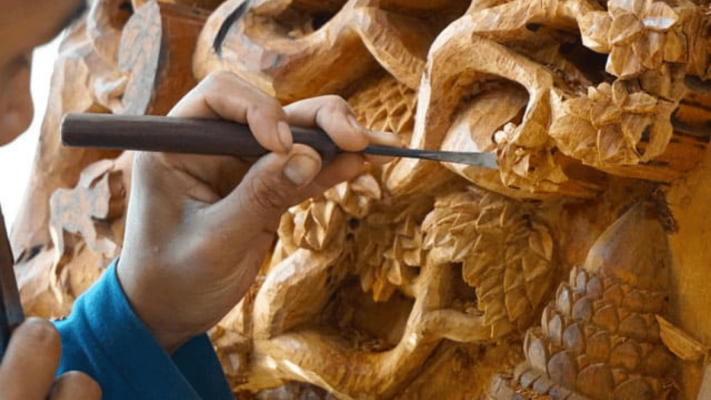
Kim Bong Carpentry Village products are famous for their delicate and vivid carvings. From graceful dragon and phoenix patterns, graceful lotus images to rustic everyday scenes, all are meticulously and meticulously carved, exuding artistic beauty and spiritual depth. The artisans do not simply carve but also convey stories, philosophies of life and wishes for peace and prosperity.
Diverse products
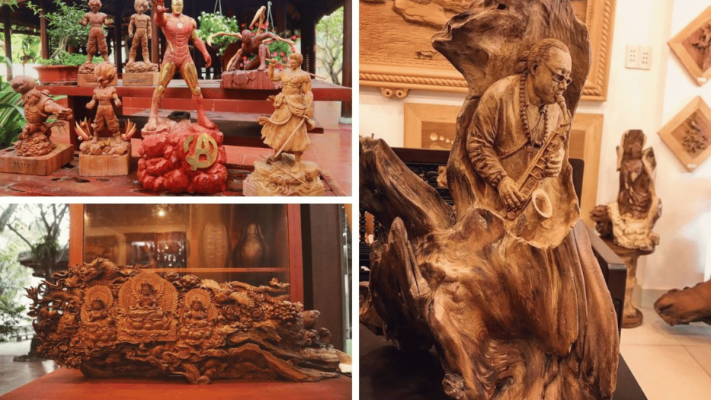
The products of Kim Bong carpentry village are very diverse, from small household items such as tables, chairs, cabinets, beds, to large architectural works such as ancient houses, communal houses, pagodas, temples. In addition, the village also produces sophisticated handicraft products for decoration and souvenir purposes such as wooden statues, wooden paintings, miniature architectural models. In particular, the boat building profession is also a strength of Kim Bong, the boats and boats made by the carpenters here are always famous for their durability and high aesthetics.
 Choosing a private car for your trip from Hoi An to Phong Nha and Hoi An to Hue has many benefits. You will enjoy privacy and comfort throughout the journey, have complete control over your departure time and can stop flexibly at your favorite attractions. In addition, a professional driver will ensure your safety and make your trip more relaxing, away from all the stress of traffic or public schedules. Choosing a private car for your trip from Hoi An to Phong Nha and Hoi An to Hue has many benefits. You will enjoy privacy and comfort throughout the journey, have complete control over your departure time and can stop flexibly at your favorite attractions. In addition, a professional driver will ensure your safety and make your trip more relaxing, away from all the stress of traffic or public schedules.
|
Carefully selected wood materials
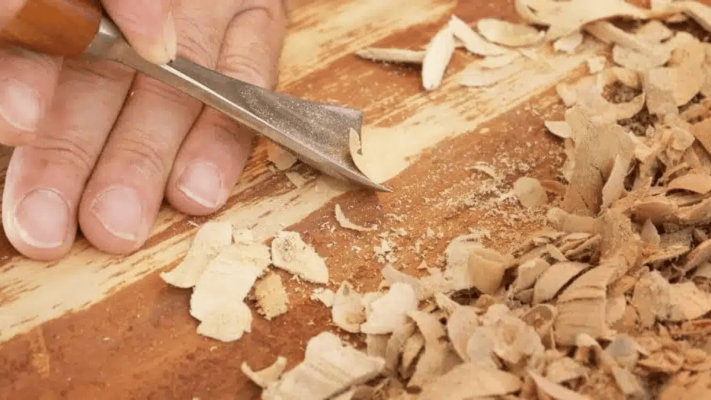
To create high-quality wooden products, Kim Bong artisans always pay attention to the selection of raw materials. The wood used is mainly precious wood such as ironwood, mahogany, rosewood, jackfruit wood… carefully selected from primeval forests. The wood processing process is also very elaborate, ensuring the wood is durable, termite-resistant and warps over time.
Experience Traveling to Kim Bong Carpentry Village
Coming to Kim Bong Carpentry Village, visitors will have an exciting journey of discovery, not only sightseeing but also experiencing and immersing themselves in this unique cultural space.
- How to get to Kim Bong Carpentry Village: About 6km from the center of Hoi An ancient town, visitors can easily travel to Kim Bong by bicycle, taxi or private car to conveniently visit other traditional craft villages. Visitors will cross Cam Kim bridge, enjoy the fresh air of the countryside to Kim Bong village. Contact Hoi An taxi: +84 933914411 to book a private car for advice and a suitable schedule.
- Visiting the carpentry workshops: Visitors can freely visit the carpentry workshops in the village, witnessing firsthand the process of creating wooden products, from the stage of wood processing, sawing, chiseling, carving to the finishing stage. You will be immersed in the atmosphere of the artisans’ hard work, listening to the echoing chiseling and smelling the fragrant wood. This is a great opportunity to better understand the elaborateness and meticulousness in each stage of making a wooden product.
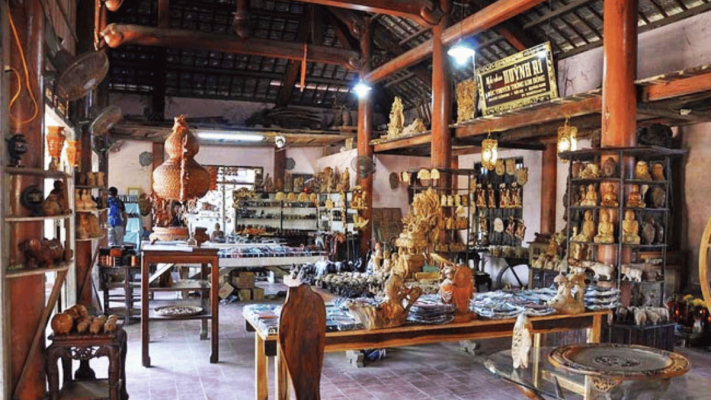
- Interact with artisans: One of the most valuable experiences when coming to Kim Bong Carpentry Village is to interact and chat with artisans. They are people who have devoted their lives to the profession, and are living treasures of knowledge about traditional carpentry. Visitors can listen to stories about the history of the craft village, traditional techniques passed down from generation to generation, and the thoughts and feelings of artisans in keeping the passion of the craft alive. This is an opportunity for you to understand more deeply the cultural and spiritual values of the craft village.
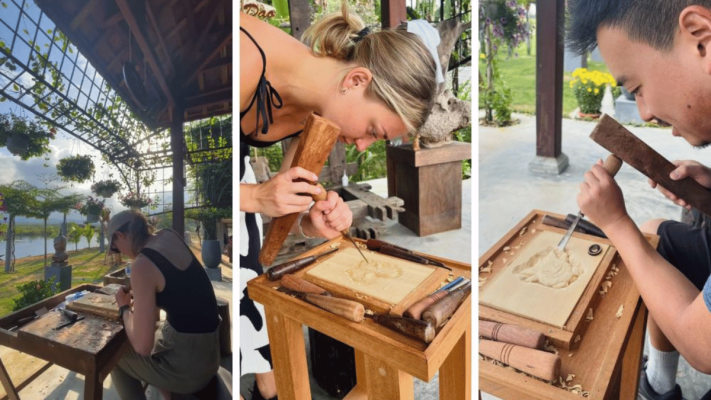
- Learn and try it yourself: If you have time, visitors can register for short-term classes to try making some simple wooden products under the guidance of artisans. Even though it is just a small souvenir, creating the product yourself will bring a sense of excitement and pride, and help you appreciate the efforts of the carpenters more.
- Souvenir shopping: After visiting and experiencing, visitors can visit the product display shops to shop for unique souvenirs. From small decorative items such as wooden keychains, mini wooden statues, to more sophisticated interior products such as tables, chairs, shelves, all are meticulously handcrafted and bear the mark of Kim Bong Carpentry Village. Each product is a work of art, carrying the story and quintessence of the craft village.
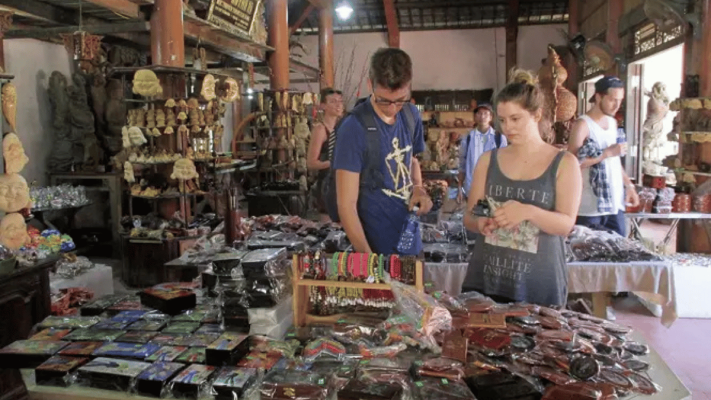
- Explore the peaceful landscape: In addition to learning about carpentry, visitors can also enjoy the peaceful and poetic space of Kim Bong village. Walking on small village roads, admiring ancient houses and green gardens will bring a feeling of relaxation and comfort. You can rent a bicycle to explore the village, or simply sit on the banks of the Thu Bon River, enjoy the cool breeze and admire the scenery.
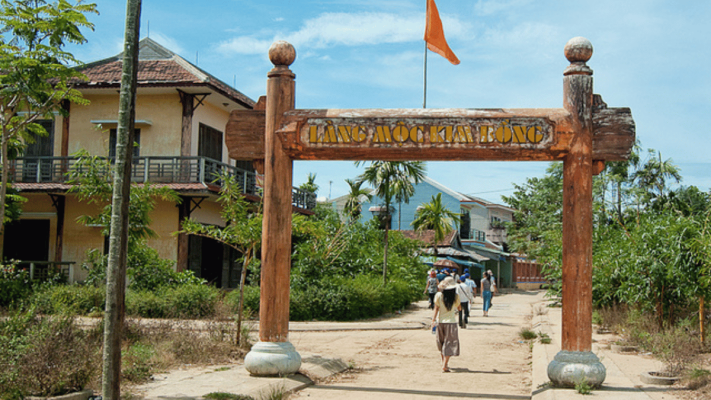
Explore Other Traditional Craft Villages of Hoi An
Besides the sophistication of Kim Bong Carpentry Village, Hoi An is also the cradle of many other traditional craft villages, each with its own beauty, story and quintessence. Exploring these craft villages will be an interesting journey, helping visitors understand more deeply the culture, ingenuity and creativity of the people here.
Thanh Ha Pottery Village
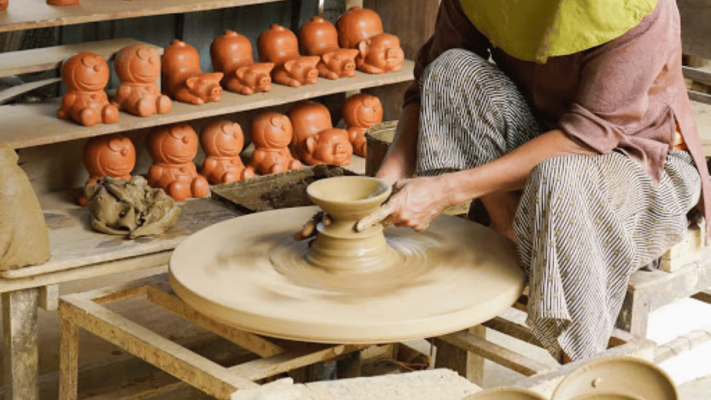
Located about 3km from the center of Hoi An ancient town, Thanh Ha Pottery Village is one of the oldest craft villages in Vietnam, with a history of formation and development of about 500 years. Thanh Ha pottery products are famous for their rustic, simple but extremely durable and handmade imprint.
- Featured products: The products of the pottery village are very diverse, from daily life items such as pots, pans, teapots, jars to decorative products, ceramic statues, and sophisticated ceramic lanterns. Each product is imbued with the passion and talent of the craftsman.
- Tourism experience: Coming to Thanh Ha, visitors will witness the pottery making process from kneading clay, shaping, drying and firing. You can also try your hand at shaping pottery on a turntable under the guidance of artisans, creating your own product. Afterwards, you can shop for your favorite ceramic items at the village shops, or visit Thanh Ha Terracotta Park to admire unique ceramic architectural works, simulating famous works around the world
Hoi An Lantern Village
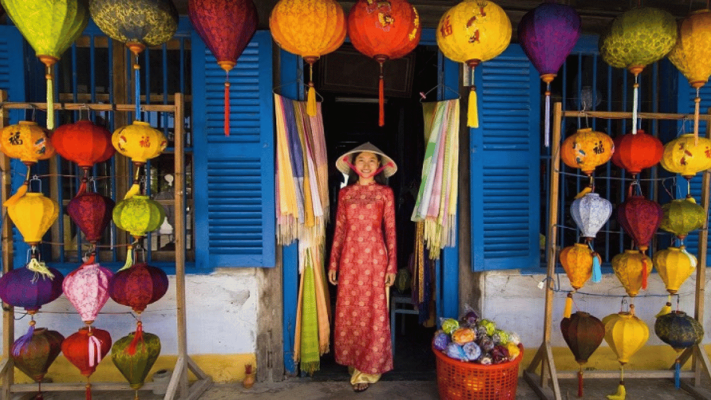
Although not a concentrated craft village like Kim Bong or Thanh Ha, the art of lantern making has become an indispensable symbol and soul of Hoi An. Small lantern workshops are scattered throughout the old town, turning this place into a giant lantern village.
- Characteristics and Meaning: Hoi An lanterns are handcrafted from natural materials such as bamboo, silk, and satin. The bamboo frame is skillfully bent, then covered with colorful silk, creating lanterns with diverse shapes (round, square, pumpkin, cylindrical…) and brilliant colors. Lanterns are not only decorative but also have feng shui meaning, bringing luck and peace to the owner.
- Travel experience: Visitors can easily find lantern shops throughout the old town. Here, you can not only admire thousands of lanterns of all shapes and colors, but also participate in short lantern making classes. Making a small, pretty lantern yourself and bringing it home as a souvenir will be a memorable and meaningful experience. Especially, on the full moon night of every month, when the ancient streets turn off the lights and only light up the lanterns, the whole of Hoi An is magical and shimmering like a fairy tale painting, bringing wonderful moments
Kim Bong Carpentry Village is not only a traditional craft village but also a living museum of wood carving art. Coming here, visitors can not only admire unique works of art but also listen to stories about history and the dedication of talented craftsmen who have preserved and promoted a precious cultural heritage.