
Hoian Ancient town, Travel Guide
Cantonese Assembly Hall Hoi An

When mentioning Hoi An old town, visitors often imagine ancient streets, the poetic Hoai River and unique architectural heritages. Among them, Cantonese Assembly Hall Hoi An stands out as a must-see destination, carrying within it the unique historical, cultural and architectural values of the Cantonese Chinese community.
Address of the Cantonese Assembly Hall Hoi An

- Address: 176 Tran Phu Street, Hoi An City, Quang Nam Province.
- Opening hours: 6am – 4pm
The Cantonese Assembly Hall is located on the “heritage road” Tran Phu with many unique architectural works of great historical significance. Located in the center of Hoi An ancient town, many visitors come here every day to listen to the explanation about the Cantonese Assembly Hall.
Read more: things to do in Hoi An old town
Historical origin of the Cantonese Assembly Hall
The Cantonese Assembly Hall Hoi An, also known as the Quang Trieu Pagoda, was built in 1885 by Chinese merchants and expatriates of Cantonese and Trieu Khanh (China) origin who came to Hoi An to live and trade.
Initially, the main purpose of the Assembly Hall was to worship Thien Hau Thanh Mau (the patron goddess of fishermen and merchants) and Confucius.
However, after 1911, the Assembly Hall was converted to worship Quan Cong (Quan Vu) and Tien Hien. Quan Cong is a famous general in Chinese history, symbolizing loyalty, integrity, wisdom, kindness and courage – qualities that the Chinese believe will bring luck and success in life and business.
The Assembly Hall is not only a place of spiritual worship but also a center for community activities, a place for the Cantonese people in Hoi An to meet, exchange business, and help each other.
| Private cars offer maximum flexibility and convenience for your trip. You can take advantage of private space and comfort, in addition, private cars also help save significant time when you actively travel and stop along the way. |
Meaning and value of Cantonese Assembly Hall Hoi An
- The Cantonese Assembly Hall is one of the special religious places of the Chinese in Hoi An, where they worship, pray for peace, luck, and success in business.
- This is the center of activities of the Cantonese Chinese community, where they meet, exchange information, and maintain mutual support.
- The Assembly Hall plays an important role in preserving and promoting the cultural values, beliefs, and traditional customs of the Chinese in Hoi An.
- The Cantonese Assembly Hall is an important part of Hoi An Ancient Town, a world cultural heritage recognized by UNESCO in 1999. This affirms the unique historical, architectural, and cultural values of the Assembly Hall, as well as the entire old town.
Unique architecture of the Cantonese Assembly Hall
Similar to the Fujian Assembly Hall, entering the Hoi An Cantonese Assembly Hall, visitors will be immediately attracted by the typical Chinese architecture, harmoniously blended with Vietnamese traditions. The architecture of the assembly hall is a harmonious combination of wood and stone. The details of the assembly hall are elaborately carved, creating a unique and unmistakable feature.
- Tam Quan Gate: The first impression is the massive Tam Quan Gate with elaborate carvings, curved tile roofs decorated with splendid dragons and phoenixes. The main vermillion color symbolizes luck and prosperity, combined with yellow and green to highlight the ancient and magnificent beauty.
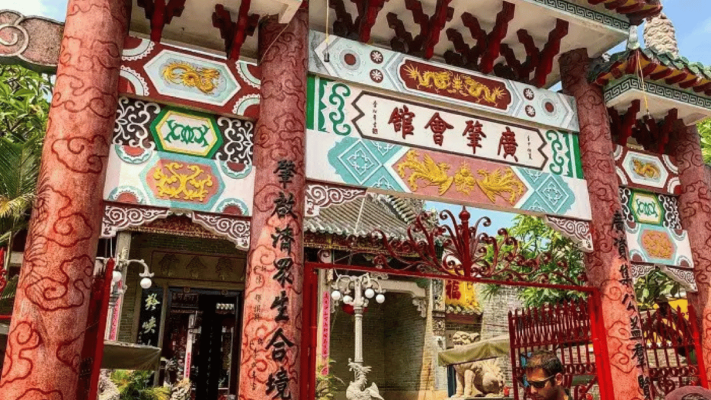
- Front yard: Behind the gate is a large brick-paved yard, on both sides are elaborately trimmed bonsai pots, creating a cool, peaceful green space.

- Main hall: The main place of worship of the Assembly Hall, the main hall is meticulously designed with large ironwood pillars, carved with winding dragons. The Quan Cong altar is placed in the middle, in front is a large incense burner and worship items. In particular, visitors will see horizontal lacquered boards and parallel sentences carved with sophisticated Chinese characters, expressing the moral values and philosophy of life of the ancients.

- The back shrine: Behind the main hall is the back shrine, where the ancestors of the Cantonese community are worshiped, showing respect and gratitude to those who contributed to the construction and development of the Assembly Hall.

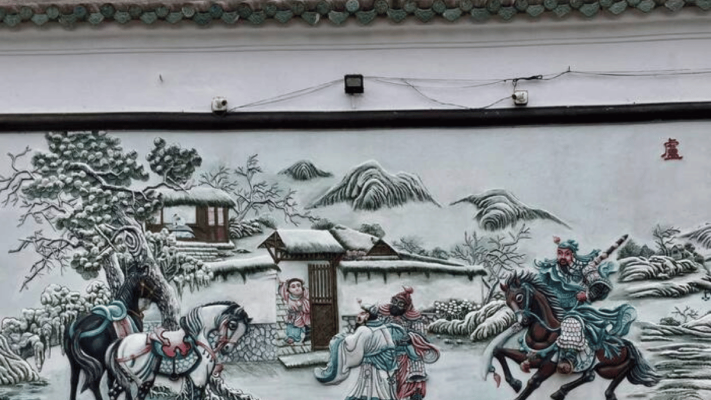
- Decorative details: The highlight of the Assembly Hall’s architecture is the sculptures and carvings on wood, stone, and ceramics with images of dragons, phoenixes, unicorns, flowers, leaves, and birds depicted vividly and delicately. The reliefs on the walls, lacquer paintings, horizontal lacquered boards, and parallel sentences all bear the mark of Chinese culture and are valuable works of art

Ancient relics and traditional festivals at the Cantonese Assembly Hall
Exploring the Hoi An Cantonese Assembly Hall is not just about its unique architecture. To truly appreciate the historical and cultural value of this place, visitors should take the time to learn about the preserved relics and immerse themselves in the atmosphere of the vibrant traditional festivals.
Ancient relics in the Cantonese Assembly Hall
Entering the Assembly Hall, you will feel like you are lost in a small museum with countless antiques imbued with the breath of time and the quintessence of Cantonese culture. Each artifact tells a separate story about the history of the formation and development of the Chinese community in Hoi An:
- Quan Cong Riding a Horse: Right in the main hall, the large painting depicting Quan Cong riding a horse will attract all eyes. This is not only an exquisite work of art but also a symbol of loyalty, courage and wisdom, highly respected by the Cantonese community.
- Incense burners and worship items: Pay attention to incense burners made of bronze, cast iron or alloy, many of which are hundreds of years old. They are meticulously carved with traditional patterns, showing respect and solemnity in rituals.

- Exquisite sculptures: Every detail from the pillars, roof tiles to the reliefs and statues are testament to the talent of ancient artisans. Images of dragons, phoenixes, unicorns, flowers, leaves, and birds are vividly carved, especially the elaborate porcelain relief details, creating a unique feature for the project.

Traditional festivals
Taking part in traditional festivals at the Cantonese Assembly Hall Hoi An is a great way to feel the pulse of Chinese culture. It often hosts major festivals, attracting large crowds of tourists and locals:
- Quan Cong Festival (June 24th of the lunar calendar): This is the most important festival, commemorating Quan Cong’s birthday. You will witness solemn sacrificial rituals, followed by vibrant lion and dragon dances and a procession of Quan Cong’s palanquin through the ancient streets. The bustling festival atmosphere with the sound of drums and gongs will be unforgettable.

- Tet Nguyen Tieu (Full Moon Festival of the first lunar month): Marking the end of the Lunar New Year, Tet Nguyen Tieu at the Cantonese Assembly Hall is a major event. The Assembly Hall is splendidly decorated with hundreds of colorful lanterns, creating a magical scene. You can immerse yourself in the joyful atmosphere of lion and dragon dances, participate in folk games, and especially experience releasing flower lanterns on the Hoai River in the evening – a poetic and spiritual scene.

Read more: Explore lanterns in Hoi An
Note when visiting:
When visiting the Cantonese Assembly Hall Hoi An, to have a complete experience and show respect for this cultural heritage, you should note the following:
- You should wear polite clothes when entering religious sites.
- Visitors should maintain public hygiene and keep quiet so as not to affect the sacred space of the Assembly Hall.
- Although photography is allowed in most areas, if you want to take portraits of locals or ceremonies, ask first. Also, avoid using flash photography as it can damage ancient artifacts.
The Cantonese Assembly Hall Hoi An is a must see destination when exploring the ancient town of Hoi An. This is not only a beautiful architectural work but also a vivid testament to the cultural exchange between Vietnam and China, giving visitors a profound experience of the history and beliefs of this heritage land.