
Hoian Ancient town, Travel Guide
Fujian Assembly Hall : A Must visit landmark in Hoi An

Hoi An is a UNESCO World Heritage Site that has long fascinated visitors with its ancient beauty, shimmering lantern streets and unique cultural blend. Among the countless ancient architectures, a prominent place that visitors cannot miss is the Fujian Assembly Hall ( Phuc Kien Assembly Hall). This is not only an impressive architectural work but also a living testament to the history of trade and cultural exchange between the Vietnamese and the Chinese community in Hoi An.
Where is the Fujian Assembly Hall in Hoi An?
The Fujian Assembly Halls is one of the extremely famous tourist attractions in Hoi An. The Assembly Hall was built by the Fujian people who have lived in Hoi An for a long time. Because of its location right in the center of the old town, it is very convenient for tourists to visit the Assembly Hall and neighboring places.
- Location: 46 Tran Phu, Hoi An, Vietnam
- Reference opening hours: from 07:00 to 17:00 daily
- Ticket price for the Fujian Assembly Hall in Hoi An: This is one of the destinations that require tickets in Hoi An, so to visit the Assembly Hall (and some other optional locations), tourists need to pay 150,000 VND/ticket
Explore the history of the Fujian Assembly Hall

The Fujian Assembly Hall originated as a small shrine built in 1697 by Fujian merchants and residents who came to Hoi An to live and do business. Initially, it was used to worship Thien Hau Thanh Mau, the patron goddess of seafarers, with the wish to pray for smooth sailing and a peaceful life.
Over time, especially in 1792 and the following years, the Fujian Assembly Hall was restored and expanded many times, becoming the massive and imposing architectural complex it is today. With the financial and labor contributions of the Fujian community, the building not only serves as a place of worship but also becomes a community center, a place to solve common problems and connect people living far away from home. The expansion not only demonstrates the prosperous development of the Fujian community but also symbolizes their integration and contribution to the economic, social and cultural life of Hoi An.
Impressive Fujian Assembly Halls Architecture
Passing through the majestic gate, visitors will be immediately attracted by the unique architectural beauty of the Fujian Assembly Hall. The building was built in the traditional Chinese architectural style, with a harmonious combination of wood, stone and brick. Every detail, no matter how small, is elaborately and meticulously carved and decorated, demonstrating the skillful craftsmanship of ancient artisans.
The architectural complex of the Fujian Assembly Hall includes many main items such as:
- Tam Quan Gate: The gateway leading to the Assembly Hall, the Tam Quan Gate is built majestically with sophisticated and colorful patterns. On both sides of the gate are statues of two majestic guardian gods, creating a solemn look for the building.
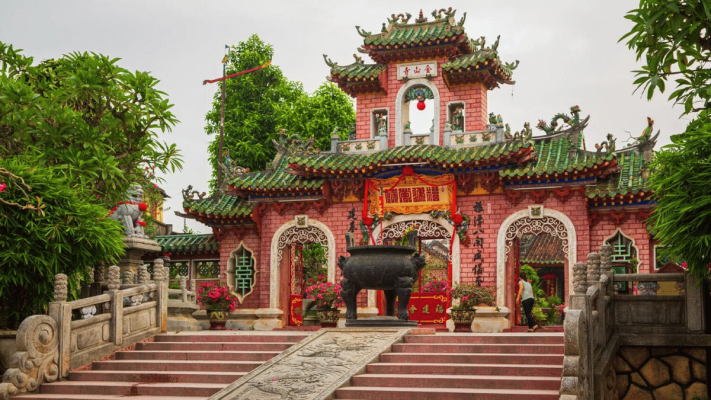
- Courtyard: Spacious and airy, where visitors can relax and admire the entire architecture of the Assembly Hall. In the middle of the courtyard of Fujian Assembly Hall is a rockery, symbolizing majestic mountains, bringing a sense of peace and tranquility.

- Main Hall: The most important area of Fujian Assembly Hall, where the Thien Mau Thien Hau is worshiped, who will come to help and rescue the Chinese businessmen in accidents on the Ocean. The main hall is solemnly decorated with many ancient statues, horizontal lacquered boards, and elaborately carved parallel sentences.

- Outbuildings and backyard: Includes additional shrines, where other gods such as the God of Wealth and the Goddess of Birth are worshiped. This area also displays many valuable artifacts related to the history and culture of the Fujian community in Hoi An.
The special feature of the architecture of the Fujian Assembly Hall is the attention paid to decorative details. The elaborate wood carvings of dragons, phoenixes, flowers and leaves, and folk tales are vividly depicted on the rafters and pillars. The murals and ceramic reliefs also contribute to creating a colorful picture, reflecting the beliefs and aspirations of the people. The main colors are red and yellow, symbolizing luck and prosperity in East Asian culture, further enhancing the splendor and solemnity of the building.
 Traveling to Fujian Assembly Hall by private car is an ideal choice for a comfortable and convenient trip. You can easily book a private car from Da Nang or Hue to enjoy a private journey, flexible in terms of time and stopover locations. Experienced drivers will pick you up and drop you off at your door, helping you optimize your Hoi An tour schedule, especially when combining multiple destinations. Traveling to Fujian Assembly Hall by private car is an ideal choice for a comfortable and convenient trip. You can easily book a private car from Da Nang or Hue to enjoy a private journey, flexible in terms of time and stopover locations. Experienced drivers will pick you up and drop you off at your door, helping you optimize your Hoi An tour schedule, especially when combining multiple destinations.
|
Things to note before visiting Fujian Assembly Hall
To have the best experience when visiting the Fujian Assembly Hall, visitors should note the following:
- Dress: The Fujian Assembly Hall is a sacred place, so visitors should wear polite and modest clothes when visiting. Avoid wearing clothes that are too short or revealing to show respect.
- Keep quiet: When in the worship area, keep quiet, do not talk loudly or make noise so as not to affect the solemn atmosphere.
- Take photos: Visitors are allowed to take photos within the Assembly Hall premises, but please note not to take flash photos directly at the worship statues and limit disturbing people who are praying.
- Visiting time: The Fujian Assembly Hall is usually open from early morning to late afternoon. The best time to visit is early morning or late afternoon to avoid crowds and feel a more peaceful atmosphere.
Some tourist attractions near Fujian Assembly Hall
In addition to immersing yourself in the beauty and sacredness of the Fujian Assembly Hall, visitors to Hoi An old town also have countless options to explore other attractive destinations, all within walking distance or a short trip, creating a seamless and exciting journey to explore the ancient town.
- Right near the Assembly Hall, you can easily visit Phung Hung Ancient House and Tan Ky Ancient House. These are ancient merchant houses that have been preserved almost intact from hundreds of years ago, bearing the traditional architectural mark of Hoi An with a subtle combination of Vietnamese, Japanese and Chinese styles. When entering here, you will feel like you are lost in a space of the past, admiring the ancient tables and chairs, altars, household items and listening to interesting stories about the history of the owner’s families.

- Japanese Bridge: From the Fujian Assembly Hall, you only need to walk a few minutes to reach the Japanese Covered Bridge. This is a unique architectural work, not only a bridge connecting the two banks of the old town but also a small temple located right on the bridge. Built by Japanese merchants in the 17th century, the Japanese Covered Bridge is a vivid testament to the strong cultural exchange between Vietnam, Japan and China during the time when Hoi An was a bustling trading port.

Read more: Things to do in Hoi An
The Fujian Assembly Hall is not only a beautiful architectural work but also a cultural, historical and spiritual treasure in the heart of Hoi An ancient town. This place not only attracts visitors by its ancient and sophisticated beauty but also by stories about cultural exchange, the formation and development of a community. Visiting the Fujian Assembly Hall is a meaningful journey of discovery, helping visitors understand more deeply about an indispensable part of Hoi An’s heritage. Therefore, when coming to this ancient city, do not miss the opportunity to visit the Fujian Assembly Hall – a destination that promises to bring many memorable experiences.
Pingback: Explore Hoi An Coconut Village - Hoi An Taxi and tour